
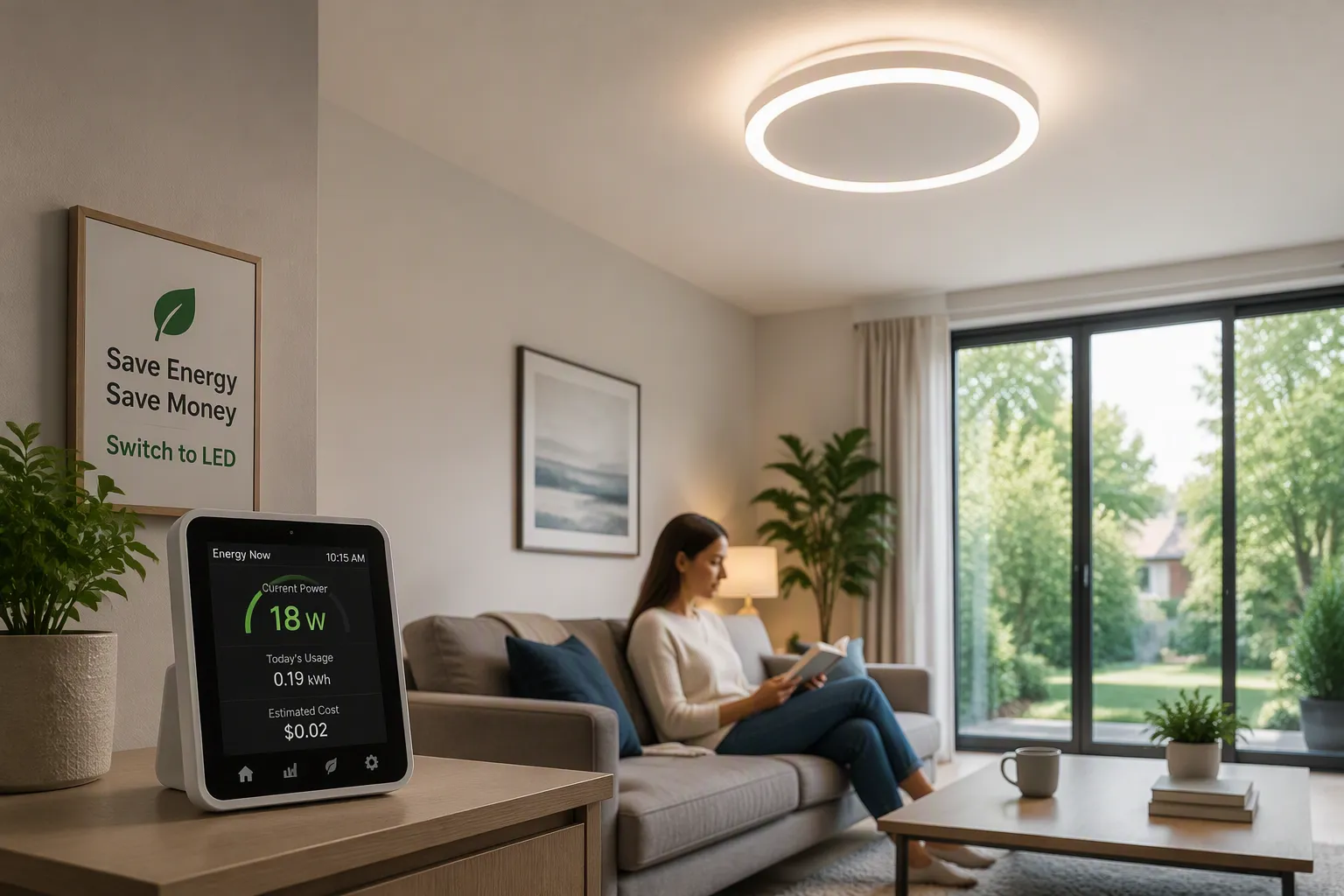
LED ceiling light fixtures deliver the best energy efficiency in residential lighting. They convert approximately 95% of electricity into light, operate for up to 50,000 hours, and reduce electricity bills by up to 80%. These fixtures use up to 80% less energy than incandescent bulbs and about 50% less than fluorescent lighting. Switching to LED ceiling lights represents one of the simplest and most impactful energy upgrades a homeowner can make. The advantages extend beyond savings to include zero UV emissions, environmental benefits, superior comfort, and design flexibility. Homeowners should select products from a reliable LED Ceiling Light Manufacturer. Many led light manufacturers have refined their products for maximum performance. These led light fixtures provide consistent, flicker-free illumination.
How LED Ceiling Light Fixtures Work
The Science Behind LED Technology
Light-Emitting Diodes Explained Simply
LEDs produce light through a process called electroluminescence. A semiconductor chip, often made of gallium arsenide or gallium phosphide, sits at the core of the device. The following steps describe how this chip converts electricity into light:
- An electric current passes through the semiconductor material.
- The current energizes the electrons, moving them to higher energy levels.
- These energized electrons then recombine with holes (electron vacancies) within the semiconductor.
- Each recombination releases energy in the form of a photon, which is a particle of light.
- The semiconductor’s energy bandgap determines the photon’s wavelength, which dictates the light’s color.
- Efficient light emission requires suitable semiconductor materials and proper temperature and current management.
Phosphor coatings often play a role in white LED fixtures. A blue LED emits short-wavelength light, and the phosphor layer converts some of that light into longer wavelengths. The mixing creates white light. This method produces consistent, high-quality illumination without the heat of traditional bulbs.
How Electrons Create Light Without Heat
The key to LED efficiency lies in the minimal heat generation during light production. Traditional incandescent bulbs rely on a heated tungsten filament, wasting about 90% of energy as heat. LEDs do not use a filament. Instead, the electroluminescent process converts roughly 95% of electrical energy directly into light, with only about 5% lost as heat. The following table compares the energy conversion across common lighting technologies:
| Lighting Technology | Energy Converted to Light | Energy Lost as Heat |
|---|---|---|
| LED | ~95% | ~5% |
| Incandescent | ~10% | ~90% |
| Fluorescent | Moderate | Remaining energy lost as heat |
This low thermal signature allows LED fixtures to operate safely in enclosed ceiling spaces, reducing fire risk and keeping the room cooler.
Why This Design Saves Energy
Direct Light Conversion Versus Heat Waste
LED technology achieves energy efficiency through direct light production without an intermediate heat stage. In an incandescent bulb, electricity heats a filament until it glows, wasting most of the energy. LEDs bypass that step entirely. The conversion of electricity to photons happens at the semiconductor level, resulting in more usable light per watt of electricity. This direct conversion cuts electricity consumption by up to 80% compared with incandescent options. It makes LED fixtures a superior choice for any home.
The Role of Drivers and Heat Sinks
Two components ensure LED systems operate efficiently: the driver and the heat sink. LED drivers are essential components. They convert incoming voltage into a regulated constant current suitable for the LED array. They shield the semiconductor chips from voltage spikes and fluctuations. Modern drivers incorporate dimming and smart control capabilities. Their own efficiency directly affects the overall system efficiency.
Heat sinks address the remaining thermal challenge. LEDs are far more efficient than traditional bulbs. Nevertheless, roughly 70–80% of the electrical energy supplied still converts to heat rather than light. Effective thermal management prevents this heat from raising the junction temperature of the semiconductor chip. Heat sinks use fins or similar structures to maximize surface area and enhance convective cooling. Manufacturers typically make them from aluminum. These components conduct heat away from the chip to the surrounding environment. This process maintains low junction temperatures that extend LED lifespan beyond 50,000 hours. It also ensures consistent light output and color quality over time.
Built for Ceiling Applications
Why Ceiling Fixtures Maximize LED Advantages
Ceiling-mounted fixtures benefit uniquely from LED properties. LEDs emit minimal heat. This property allows safe enclosure in flush-mount or recessed housings without risk of overheating. The long lifespan—often 15,000 to 50,000 hours—eliminates the need for frequent ladder climbs to replace bulbs in hard-to-reach ceiling spots. LEDs also withstand vibration and shock better than fragile incandescent or fluorescent tubes. This durability adds value. The table below summarizes key attributes that make LED fixtures advantageous:
| Attribute | LED | Incandescent | Fluorescent |
|---|---|---|---|
| Energy converted to light | ~95% | ~10% | Less efficient than LED |
| Energy wasted as heat | ~5% | ~90% | More waste than LED |
| Wattage for equivalent brightness | 10W | 60W | ~15-20W (CFL) |
| Lifespan (hours) | 15,000–50,000 | 1,000 | 8,000–15,000 |
| Durability | Resistant to shock/vibration | Fragile | Moderately durable |
| Environmental hazards | None | None | Contains mercury |
Integrated vs. Replaceable LED Designs
Homeowners can choose between integrated and replaceable LED ceiling fixtures. Integrated designs have the LED chips permanently mounted inside the fixture. They often offer longer warranties and optimized thermal management. The LEDs eventually degrade. At that point, the entire fixture requires replacement. Replaceable designs use standard LED bulbs. These bulbs can be swapped independently. This flexibility allows future upgrades. Both options leverage the same underlying LED technology. Integrated fixtures typically maximize efficiency and design compactness.
LED Ceiling Light Fixtures vs. Incandescent Bulbs
The Energy Gap in Numbers
Watts Needed for the Same Brightness
The most direct way to compare LED ceiling light fixtures with incandescent bulbs is to examine wattage for equivalent brightness. Brightness is measured in lumens, not watts. A traditional incandescent bulb requires 60 watts to produce 800 to 900 lumens. An LED fixture delivers the same brightness with only 8 to 10 watts. This dramatic difference means LEDs use roughly 80 to 90 percent less energy for the same amount of light.
| Desired Brightness (Lumens) | Incandescent (Watts) | LED (Watts) |
|---|---|---|
| 800 – 900 lm | 60W | 8W – 10W |
A homeowner replacing a single 60-watt incandescent bulb with a 10-watt LED immediately cuts energy consumption by more than 80 percent. This reduction applies to every fixture in the home. A room with ten ceiling lights would draw 600 watts with incandescent bulbs. The same room with LED fixtures draws only 80 to 100 watts. The energy gap is substantial and measurable from the first day of use.
Heat Output and Wasted Electricity
Incandescent bulbs generate light through a heated filament. This design wastes most of the electricity as heat rather than light. Approximately 90 percent of the energy consumed by an incandescent filament is wasted as heat, leaving only a small fraction to be converted into light.
Approximately 90% of the energy consumed by an incandescent filament is wasted as heat, leaving only a small fraction to be converted into light.
This wasted heat creates several problems. It raises the temperature of the room, which forces air conditioning systems to work harder during warm months. It also makes the bulb surface dangerously hot to the touch. LEDs produce almost no heat by comparison. They convert most of their energy into visible light. This efficiency keeps rooms cooler and reduces the load on cooling systems.
Lifespan Comparison
50,000 Hours vs. 1,000 Hours
The lifespan difference between LED and incandescent technology is enormous. A typical incandescent bulb lasts about 1,000 hours. A commercial-grade LED ceiling fixture lasts 50,000 hours or more. This 50-to-1 ratio means one LED fixture outlasts fifty incandescent bulbs.
| Bulb Type | Rated Life (hours) | Real-World Life | Replacements (10 yrs, 10 hrs/day) |
|---|---|---|---|
| Incandescent | ~1,000 | ~1,000 hrs | ~36 bulbs |
| Budget LED | 15,000–25,000 | 2–5 years | 4–8 bulbs |
| Commercial-Grade LED (e.g., ceiling fixtures) | 50,000+ (L70) | 10–15+ years | 0–1 fixtures |
The L70 rating for commercial-grade LEDs means the fixture maintains 70 percent of its original brightness after 50,000 hours. Even budget LED options last 15 to 25 times longer than incandescent bulbs. This longevity changes the entire ownership experience for homeowners.
How Often You Would Replace Bulbs
Replacement frequency reveals the practical burden of incandescent lighting. A homeowner using ten incandescent bulbs for six hours per day would need to replace 100 bulbs over ten years. The same homeowner using LED fixtures would need zero replacements during that period.
| Scenario | Incandescent Replacements | LED Replacements |
|---|---|---|
| 10 bulbs, 6 hrs/day, over 10 years | 100 bulbs | 0 bulbs |
This example assumes moderate usage. Higher daily usage makes the contrast even sharper. At ten hours per day, incandescent bulbs require approximately 36 replacements over a decade. Commercial-grade LED fixtures need at most one replacement in the same period. The time and effort saved by choosing LEDs is considerable. Homeowners no longer need to climb ladders, purchase replacement bulbs, or dispose of burned-out units.
Real Cost Over Time
Purchase Price vs. Operating Cost
The upfront purchase price of LED fixtures is higher than incandescent bulbs. This initial cost difference often discourages homeowners from making the switch. A closer look at operating costs reveals the true financial picture. Electricity consumption dominates the total cost of ownership for any lighting product.
A single LED fixture operating three hours per day for ten years costs about $19 total. This figure includes the purchase price and electricity. An equivalent incandescent fixture costs about $100 over the same period. The LED option delivers an 81 percent cost reduction.
| Cost Component (10 years, 3 hrs/day) | LED Fixture | Incandescent Fixture |
|---|---|---|
| Bulb purchase cost | $5 (1 bulb, lasts 50,000+ hrs) | ~$15 (10 bulbs, each lasts ~1,000 hrs) |
| Electricity cost | ~$14 (10W equivalent) | ~$85 (60W, 10,950 hrs at $0.13/kWh) |
| Total 10-year cost | $19 | $100 |
The operating cost gap becomes even more dramatic at scale. A home with ten bulbs running six hours per day spends about $171 annually on incandescent lighting. The same home with LED fixtures spends only about $17 per year. The annual savings reach approximately $154.
| Metric | LED Ceiling Light Fixture | Incandescent Bulb |
|---|---|---|
| Wattage for 800 lumens | 8–12 watts | 60 watts |
| Energy efficiency | Uses about 80–90% less energy | Baseline higher energy use |
| Annual operating cost (10 bulbs, 6 hrs/day) | About $17 | About $171 |
| Annual savings with LED | About $154 saved per year | — |
| 10-year cost per fixture | $19 | $100 |
| 10-year cost reduction | 81% lower | Baseline |
The True Cost of Incandescent Lighting
The true cost of incandescent lighting extends beyond the purchase price and electricity bill. Homeowners must account for replacement bulbs, the labor of changing them, and the added cooling costs from waste heat. Over ten years, a household with ten incandescent bulbs spends approximately $1,000. The breakdown includes $150 for bulbs, $850 for electricity, and numerous replacements.
The same household using LED fixtures spends about $190 over ten years. This total covers $50 for bulbs and $140 for electricity. The LED option requires zero replacements during the period. The total savings with LED over ten years reach $810.
- LED total 10-year cost for 10 bulbs: $190
- Bulb cost: $50
- Electricity: $140
- Replacements: 0
- Incandescent total 10-year cost for 10 bulbs: $1,000
- Bulb cost: $150
- Electricity: $850
- Replacements: many
- Total savings with LED over 10 years: $810
These figures demonstrate that the higher upfront cost of LED ceiling light fixtures is recovered quickly. The operating savings accumulate year after year. The financial case for LED lighting is clear and compelling for any homeowner.
LED Ceiling Light Fixtures vs. Fluorescent and CFL Lighting
Efficiency Head to Head
Lumens per Watt Compared
Luminous efficacy measures how well a light source converts electricity into visible light. LED ceiling light fixtures consistently outperform fluorescent and CFL options on this metric. The following table illustrates the typical efficiency ranges:
| Lighting Type | Typical Luminous Efficacy (lm/W) |
|---|---|
| LED ceiling light fixtures | 80 – 150+ lm/W |
| Fluorescent lamps (including T8 tubes) | 50 – 100 lm/W |
| CFL bulbs (a type of fluorescent) | 50 – 100 lm/W |
LED fixtures commonly exceed 50 lumens per watt, while fluorescent options often fall below 30 lumens per watt after accounting for fixture and reflector losses. This gap translates directly into lower electricity consumption for the same brightness.
Warm-Up Time and Energy Draw
Fluorescent and CFL bulbs often require a warm-up period before reaching full brightness. This delay frustrates homeowners in cold rooms or outdoor settings. LED ceiling fixtures deliver instant, full illumination the moment a switch flips. They also waste less energy during operation.
LED lighting delivers higher energy efficiency because it wastes less energy during light production and directs light more effectively toward occupied spaces. Fluorescent fixtures emit light in 360 degrees, so reflectors and fixture housings must redirect much of the light toward the intended area, creating system losses and reducing real-world efficiency. LEDs naturally emit directional light across roughly 180 degrees, which significantly improves useful lumens and overall system efficiency.
Health and Safety Differences
Mercury Content in Fluorescent Tubes
Fluorescent bulbs contain mercury, a toxic substance. A fluorescent lamp consists of a phosphor-coated glass tube containing liquid mercury. When an electric current runs through the tube, it excites the mercury, which vaporizes and produces UV light. LEDs contain semiconductor diodes instead. They carry no mercury and pose no toxic exposure risk during normal use or accidental breakage.
Flicker, Hum, and Eye Comfort
Fluorescent lamps with magnetic ballasts flicker at 100 or 120 Hz. This flicker can cause problems for some individuals, including eyestrain and headaches. LEDs emit visible light directly and operate without flicker when properly designed. Specifically designed LED bulbs are 100% flicker-free. Homeowners seeking maximum eye comfort should choose flicker-free LED ceiling fixtures.
Performance in Real Homes
Cold Weather and Dimming Behavior
Fluorescent and CFL bulbs struggle in cold temperatures. They produce dimmer light and may fail to start in unheated spaces. LEDs perform reliably in cold conditions and maintain consistent output. Dimming behavior also favors LEDs. They dim smoothly across a wide range without the buzzing or flickering that affects fluorescent dimming systems.
Disposal and Recycling Concerns
Fluorescent tubes and CFL bulbs require hazardous waste disposal because of their mercury content. Homeowners must locate special recycling facilities. LEDs contain no hazardous materials and generate less landfill waste over time. Their 50,000-hour lifespan means fewer bulbs enter the waste stream. This longevity reduces both disposal costs and environmental burden.
Energy Savings and Lower Electricity Bills with LED Ceiling Light Fixtures

How Much You Can Save
Average Annual Savings per Fixture
A single LED ceiling light fixture delivers measurable savings every year. The exact amount depends on wattage difference, daily runtime, and local electricity rates. A typical comparison uses a 65-watt incandescent bulb replaced by an 11-watt LED fixture. This swap saves 54 watts per fixture. At five hours of daily use and an electricity rate of $0.13 per kilowatt-hour, one fixture saves about $12.82 per year.
| Metric | Incandescent (65W × 12) | LED (11W × 12) |
|---|---|---|
| Total wattage | 780 W | 132 W |
| Daily consumption (5 hrs) | 3.9 kWh | 0.66 kWh |
| Annual consumption | 1,424 kWh | 241 kWh |
| Annual cost (@ $0.13/kWh) | $185.12 | $31.33 |
| Annual savings | — | $153.79 (~$12.82/month) |
A typical household that replaces 15 inefficient incandescent bulbs with LED bulbs can save approximately $140 per year on energy costs. This figure grows with higher usage. A kitchen ceiling fixture running eight hours daily saves more than a closet light used for ten minutes. High-use fixtures deliver the fastest returns.
Whole-Home Savings Potential
Whole-home savings multiply the per-fixture figure across every socket. A home with 12 ceiling fixtures operating five hours daily saves $153.79 annually. Over ten years, that total reaches $1,537.90 in electricity savings alone. The following points illustrate how savings scale across different home sizes:
- Homes with 30–40 bulbs typically see a clear improvement in lighting efficiency after a full LED upgrade.
- Homes with closer to 50 sockets (not unusual) have a larger total savings opportunity.
- Annual energy reduction per bulb = (old wattage − LED wattage) × hours/day × 365 ÷ 1000.
- Example: replacing a 60W incandescent with a 9W LED saves 51W per fixture.
- Biggest savings drivers: wattage difference, daily runtime, and number of fixtures replaced.
- High-use fixtures (kitchen ceiling, hallway, porch) deliver the fastest returns.
The average household switching to LED lighting saves about $225 per year. This figure reflects a mix of fixture types and usage patterns. Homes with more fixtures or longer runtime exceed this average. The whole-home potential makes LED ceiling light fixtures a powerful financial upgrade.
Calculating Your Return on Investment
Payback Period for LED Upgrades
The payback period measures how quickly energy savings recover the upfront purchase cost. Commercial LED retrofit projects typically pay off within 2 to 4 years after completion. Utility rebates help shorten this period significantly. The actual payback depends on the existing lighting system, utility rates, operating hours, and other factors. The payback does occur, and energy expenses remain low for the lifetime of the system.
| Application Type | Payback Without Rebates | Payback With Rebates |
|---|---|---|
| Office / Retail | ~2.0 years | ~1.5–1.8 years |
| Warehouse / Industrial | ~3.0–3.7 years | ~2.0–2.5 years |
| Parking Lot Lighting | ~2.5–3.5 years | ~1.8–2.5 years |
Facilities with longer operating hours see faster returns because energy savings accumulate more quickly. Residential fixtures follow the same principle. A ceiling light used six hours daily pays back faster than one used two hours daily.
Typical LED lighting payback ranges from 1.5 to 3.7 years, with rebates and project timing determining how quickly a project becomes cash-flow positive.
Utility Rebates and Incentives
Many utility companies offer rebates for LED upgrades. These programs reduce the upfront cost and shorten the payback period. Homeowners should check with their local utility provider before purchasing fixtures. Rebate amounts vary by region and program. Some utilities offer instant discounts at the point of sale. Others provide mail-in rebates after purchase. Combining rebates with energy savings creates a strong financial case for upgrading. The table above shows how rebates cut payback periods by several months in most applications.
Long-Term Financial Benefits
Reduced Replacement Costs
LED fixtures last 50,000+ hours compared with 1,000 hours for incandescent bulbs. At five hours per day, incandescent bulbs need replacing about twice per year. Over ten years, a homeowner replaces 20 bulbs per fixture at $3 each. That equals $60 per fixture, or $720 for 12 fixtures, in bulbs alone. This figure excludes time and labor. LED fixtures last 27+ years at five hours per day. They eliminate these recurring costs entirely.
- Annual Energy Savings Calculation: For 12 recessed fixtures operating 5 hours daily at $0.13/kWh, an incandescent system (65W bulbs) costs $185.12 per year. An LED system (11W fixtures) costs $31.33 per year. Annual savings equal $153.79, or about $12.82 per month. Over 10 years, electricity savings alone reach $1,537.90.
- Replacement Cost Savings: Incandescent bulbs last 1,000 hours and require replacement about twice per year at 5 hours daily. Over 10 years, 20 bulbs per fixture at $3 each equals $60 per fixture, or $720 for 12 fixtures on bulbs alone. LED fixtures last 50,000+ hours (27+ years at 5 hours daily), eliminating these costs.
- Cooling Cost Savings: Eliminating 400–600 watts of continuous heat from incandescent fixtures reduces AC load. Every watt of heat eliminated saves about 0.25–0.33 watts of cooling energy. In warm climates with 6+ months of AC use, this adds 10–15% savings beyond direct lighting costs.
- HVAC Lifespan Extension: Reduced cooling demand lowers runtime by 50–100 hours per year. This reduction can extend HVAC equipment life by 1–2 years and delay a $5,000+ replacement expense.
Lower Cooling Bills in Summer
Incandescent lighting adds 400–600 watts of continuous heat to conditioned space. This heat forces air conditioning systems to work harder. Eliminating this heat load reduces AC runtime. Every watt of heat eliminated saves about 0.25–0.33 watts of cooling energy. In warm climates with six or more months of AC use, this adds 10–15% savings beyond direct lighting costs. The table below summarizes the long-term financial benefits:
| Benefit Category | Evidence | Quantified Impact |
|---|---|---|
| Reduced Replacement Costs | LED fixtures last 50,000+ hours vs. 1,000 hours for incandescent bulbs. At 5 hours/day, incandescent bulbs need replacing ~2x/year. | Over 10 years: 20 bulbs per fixture at $3 each = $60/fixture; for 12 fixtures = $720 in bulbs alone, plus time/labor. LED fixtures last 27+ years at 5 hrs/day, eliminating these recurring costs. |
| Lower Cooling Expenses in Summer | Incandescent lighting adds 400–600 watts of continuous heat to conditioned space. Eliminating this reduces AC runtime. | Every watt of heat eliminated saves ~0.25–0.33 watts of cooling energy. In warm climates with 6+ months of AC use, this adds 10–15% savings beyond direct lighting costs. |
| Extended HVAC Lifespan | Reduced cooling demand means fewer compressor cycles and less wear. | Reducing annual HVAC runtime by 50–100 hours could extend equipment life by 1–2 years, delaying a $5,000+ replacement expense. |
These combined benefits strengthen the financial case for energy-efficient lighting. The energy savings from lower electricity use, reduced replacement costs, and lower cooling bills accumulate year after year. Homeowners who upgrade to LED ceiling light fixtures recover their investment quickly and continue saving for decades. The long-term financial advantages make LED technology a smart choice for any household seeking better energy efficiency.
Environmental Benefits of LED Ceiling Light Fixtures
Less Energy Means Fewer Emissions
Reduced Demand on Power Plants
LED ceiling light fixtures lower electricity consumption dramatically. This reduction directly decreases the load on power plants. A single 60-watt-equivalent bulb running for 10,000 hours consumes 600 kWh as an incandescent. An LED equivalent uses only 100 kWh. This 500 kWh difference means power plants burn less fuel to meet residential lighting demand.
| Metric (per 60-watt-equivalent bulb over 10,000 hours) | Incandescent | LED | Reduction |
|---|---|---|---|
| Electricity consumed | 600 kWh | 100 kWh | 500 kWh (about 83% less) |
| CO2 emissions | ~850 lbs | ~142 lbs | ~708 lbs (about 83% less) |
| Energy use for 800 lumens | 60 watts | 8–12 watts | 80–90% less electricity |
Carbon Footprint Comparison
A typical household with 30 bulbs can cut annual electricity use by 2,500 kWh after switching to LEDs. At the US national average grid emission factor of 0.855 lbs CO₂/kWh, this equals 2,138 lbs of CO₂ avoided each year. That figure represents 1.07 tons of carbon dioxide per household annually. Homes in coal-heavy regions see even greater reductions.
Fewer Materials and Less Waste
Longer Lifespan Means Less Landfill Waste
LED fixtures last 25,000 hours or more. Incandescent bulbs last only 1,000 to 2,000 hours. One LED bulb replaces roughly 15 to 25 incandescent replacements over its lifetime. At three hours of daily use, a single LED lasts about 23 years. Over a 20-year period, LED fixtures typically require only one replacement. Incandescent fixtures require many. This longevity directly reduces disposal waste.
No Mercury or Hazardous Materials
LEDs contain zero mercury. CFL bulbs contain 3 to 5 mg of mercury, a toxic substance. CFL disposal requires hazardous waste facilities. LEDs carry no such requirement. Homeowners can place LED bulbs in regular trash or electronic recycling programs. These programs recover rare earth elements, copper, and aluminum. Manufacturers like Philips and GE offer end-of-life take-back programs for material recovery.
Supporting a Cleaner Energy Future
Pairing LEDs with Renewable Energy
LED ceiling fixtures pair effectively with solar panels and battery storage. These systems can operate independently of the grid in off-grid locations. Smart grid technologies allow ceiling lighting to communicate with energy management systems. Lights dim or switch off during peak grid load times. This capability balances demand and supports grid stability. IoT-enabled ceiling lights with occupancy sensors automatically adjust brightness. They turn off when rooms are unoccupied.
The Cumulative Impact of Small Switches
The LED lighting market will reach an estimated $118 billion by 2029. This figure represents a 70% increase from 2024. Only 1 to 2 percent of US commercial buildings have advanced lighting controls. This statistic reveals vast untapped potential. Smart streetlights with adaptive controls reduce energy use by up to 80 percent. Streetlights account for around 15 percent of global energy demand. Every LED ceiling fixture installed contributes to a cleaner, more efficient energy future.
Longevity and Low Maintenance of LED Ceiling Light Fixtures
Why LEDs Last So Long
Solid-State Construction Benefits
LED ceiling fixtures contain no filaments or fragile glass tubes. They rely on solid-state semiconductor chips that resist shock, vibration, and physical impact. This construction eliminates the most common failure points of traditional bulbs. A quality LED fixture delivers 25,000 to 50,000 hours of operating life, which equals roughly 25 years of typical use. That figure is about 50 times longer than an incandescent equivalent.
| Lighting Technology | Typical Lifespan |
|---|---|
| LED | 25,000–50,000 hours |
| CFL | 8,000–15,000 hours |
| Halogen | 2,000–4,000 hours |
| Incandescent | 1,000–2,000 hours |
Several design factors protect this lifespan. Heat sinks and thermally conductive materials pull heat away from the LED chips. High-grade chips and reliable drivers resist voltage fluctuations. Recessed housings shield the components from dust and humidity. Dimming controls and occupancy sensors also reduce operating hours and intensity, which slows wear on the internal parts.
What Shortens LED Lifespan
Heat remains the primary enemy of LED longevity. When junction temperatures rise above optimal ranges, semiconductor materials degrade faster and light output drops. Poorly ventilated fixtures, insulated ceilings without proper IC ratings, and enclosed bathroom housings all trap heat. Driver quality matters just as much. Budget fixtures often use inferior drivers that fail within five to ten years, well before the LED chips reach their potential. Voltage surges, unstable power, and generic LED chips accelerate degradation as well. Homeowners can maximize lifespan through proper installation, compatible dimmer switches, surge protectors, and regular dust removal.
Practical Benefits for Homeowners
No More Ladder Climbing to Change Bulbs
Replacement frequency drops dramatically with LED ceiling fixtures. An incandescent bulb used three hours per day burns out in about one year. An LED fixture under the same conditions lasts 15 to 25 years.
| Bulb Type | Lifespan at 3 Hours/Day | Replacement Frequency |
|---|---|---|
| Incandescent | ~10–11 months | Every year |
| LED | 15–25 years | Every 15–25 years |
This difference cuts replacement frequency by roughly 95 percent. Homeowners save time, money, and the hassle of buying and disposing of bulbs.
Ideal for Hard-to-Reach Ceiling Fixtures
High ceilings, stairwells, and vaulted entries make bulb changes difficult and sometimes dangerous. LED fixtures eliminate this recurring chore. Their long service life means one installation can outlast a homeowner’s tenure in the house. Recessed and enclosed designs also accumulate less dust, so only the diffuser or lens needs occasional cleaning.
Reliability You Can Count On
Consistent Light Output Over Time
LED fixtures maintain steady brightness far longer than traditional bulbs. The L70 rating defines the point when light output drops to 70 percent of its original level, typically at 50,000 hours. Gradual dimming, color shifting, and flickering can still occur when heat stresses the driver or phosphor coating. Quality fixtures minimize these effects through effective thermal management.
Warranty and Quality Considerations
Manufacturers back LED ceiling fixtures with warranties that signal confidence in their products.
| Warranty Term | What It Signals |
|---|---|
| 3 years | Basic market offer |
| 5 years | Solid commercial standard |
| 7 years | Strong manufacturer confidence |
| 10 years | High confidence with conditions |
Most LED warranties fall in the three-to-five-year range because real-world heat, voltage, and installation quality affect performance. Certifications such as UL, DLC, and Energy Star provide additional assurance of quality and safety.
Versatility and Design Advantages of LED Ceiling Light Fixtures
Styles for Every Room
Flush Mount, Recessed, and Pendant Options
LED technology fits nearly every ceiling fixture style. Flush mounts sit close to the ceiling and suit low rooms. Recessed downlights sit flush with the ceiling and provide focused illumination for kitchens, corridors, and bathrooms. Pendant lights hang above dining tables and kitchen islands as statement pieces. Track lighting offers adjustable fixtures for highlighting artwork or specific zones.
| Design Style | Aesthetic and Functional Benefit |
|---|---|
| Flush Mounts | Sleek, modern look; ideal for low ceilings |
| Chandeliers | Minimalist elegance without sacrificing efficiency |
| Track Lighting | Adjustable fixtures to highlight specific areas or artwork |
| Pendant Lights | Stylish options for kitchens or dining areas; combines form and function |
Matching Fixtures to Room Function
Room function guides fixture selection. LED panels and ambient solutions work well in living rooms, dining spaces, and home offices where even illumination matters. Recessed downlights serve kitchens, corridors, and bathrooms with focused light. Strip and accent lighting adds subtle highlights to shelves and cabinets. Bedroom-specific lighting uses soft, warm tones to support rest and relaxation.
Layer ceiling fixtures with floor lamps, wall sconces, or shelf lighting to introduce depth and avoid flat, one-dimensional illumination across the room.
Light Quality and Control
Color Temperature Choices
Color temperature shapes the mood of a space. Warm white (2700–3000K) suits bedrooms and cozy settings. Bright white or neutral (3500–4100K) fits bathrooms and kitchens. Daylight (5000–6500K) serves task areas, garages, and home offices.
| Color Temperature | Kelvin Range | Best Suited For |
|---|---|---|
| Warm White | 2700–3000K | Bedrooms, lounges, cozy settings |
| Bright White / Neutral | 3500–4100K | Bathrooms, kitchens |
| Daylight | 5000–6500K | Task areas, garages, home offices |
Dimming and Smart Home Integration
Dimmable drivers let users lower brightness from task-level output to a relaxed evening glow. Tunable white shifts between warm and daylight tones. Built-in motion sensors, app control, and smart home integration enable automatic adjustment and scheduling. These features prevent wasted energy when spaces sit unoccupied.
Improving Comfort and Ambiance
Instant Full Brightness
LED fixtures reach full brightness immediately. They require no warm-up time, unlike fluorescent lights. Homeowners enjoy instant illumination the moment a switch flips.
Even, Flicker-Free Illumination
LED technology produces stable, flicker-free light. Fluorescent lights often flicker, which causes eyestrain and headaches. Modern ceiling light fixtures deliver even, comfortable illumination across the room. Homeowners seeking better ambiance and lower energy bills should consider led ceiling lights for their next upgrade.
LED ceiling light fixtures win on every measure: energy conversion, cost savings, lifespan, environmental impact, and design flexibility. They use up to 80% less energy and last up to 50 times longer than incandescent bulbs. The upfront cost is quickly recovered through lower electricity bills and fewer replacements. Homeowners can start with one room or one fixture and experience the difference before upgrading their whole home. When choosing led lights for home, making the switch to LED ceiling light fixtures today creates a more efficient, comfortable, and sustainable home.
FAQ
Are LED ceiling lights worth the higher upfront cost?
Yes. The higher purchase price recovers quickly through lower electricity bills. A typical fixture saves over $150 in ten years. The long lifespan also eliminates frequent replacement costs.
Can LED ceiling lights work with dimmer switches?
Most modern LED fixtures include dimmable drivers. Homeowners must verify the package label or specification sheet. Using a non‑dimmable LED on a dimmer circuit can cause flickering or damage.
How do I dispose of LED ceiling lights?
LED lights contain no hazardous materials. Homeowners can place them in regular household trash or drop them at an electronics recycling center. Some manufacturers offer mail‑in take‑back programs.
Do LED ceiling lights lose brightness over time?
Yes, gradually. Manufacturers rate LEDs at L70, meaning the fixture maintains 70% of original brightness after 50,000 hours. The drop is slow and barely noticeable during normal use.
Are LED ceiling lights safe for enclosed fixtures?
Yes, when the fixture is rated for enclosed spaces. Quality LED designs include heat sinks that manage temperature. Checking the product specifications ensures safe operation in tight housings.
Can LED ceiling lights connect to smart home systems?
Many LED ceiling fixtures offer built‑in Wi‑Fi or Zigbee connectivity. Users can control brightness, color temperature, and scheduling through a smartphone app or voice assistant.
See Also
Smart Ways To Save Energy Using LED Ceiling Lights
Comparing LED Ceiling Lights Against Traditional Ceiling Light Fixtures
How To Select The Right LED Ceiling Lights For Your Room
A Comparison Of LED Ceiling Lights: Features, Costs, And Efficiency
